 Money Tree
By Money Tree team,
Why most budgets fail in the first month
Short answer: most budgets fail in the first month because they are too strict, too complicated, or give no quick feedback. A simpler plan with room for small treats, checked for a few minutes a day, is far easier to keep than a perfect one you give up on by week three.
If you've started and abandoned a budget more than once, the plan usually isn't the problem. The way it was set up is.
Reason 1: It was built for a perfect month
A first budget often assumes nothing unexpected happens. Then a birthday, a car service or a delayed pay day arrives, the plan breaks, and it feels easier to stop than to fix it.
A budget that survives has slack in it: a small "everything else" line and a buffer for the week you didn't see coming.
Reason 2: Too many categories
Thirty categories means thirty small decisions every time you spend. Many people do better with five to eight broad ones: housing, food, transport, bills, fun, and savings.
Reason 3: No feedback until the end of the month
If you only look at your budget at month end, the information arrives too late to change anything. A short check, a minute or two a day, lets you adjust while there's still time.
Reason 4: Limits copied from someone else
A friend's grocery limit or a rule from a video may not fit your rent, your household or your pay cycle. Start from what you actually spent recently, then adjust.
Reason 5: It feels like punishment
If every line is a restriction, it's hard to keep going. Many people add a small line for treats you needn't feel bad about and find they stay on track longer.
A worked example
| First attempt | Revised plan | |
|---|---|---|
| Categories | 22 | 6 |
| Fun money | $0 | $80 a month |
| Buffer for surprises | none | $100 |
| Check-in | month end | two minutes a day |
| Months before giving up | 1 | still going |
The revised plan isn't stricter. It's easier to live with, which is why it lasts.
Common mistakes
- Starting with the tightest limits possible. Begin near what you really spend and trim from there.
- Skipping a bad week. One overspend isn't the end. Pick the plan back up the next day.
- Tracking everything by hand. The more effort it takes, the sooner it stops.
- Having no reason. A goal you care about gives the budget a point.
How to do it in Money Tree
- Look at your day, not just your month. The home screen shows your net worth, your current streak and today's mission, so there's a reason to check in for a minute.
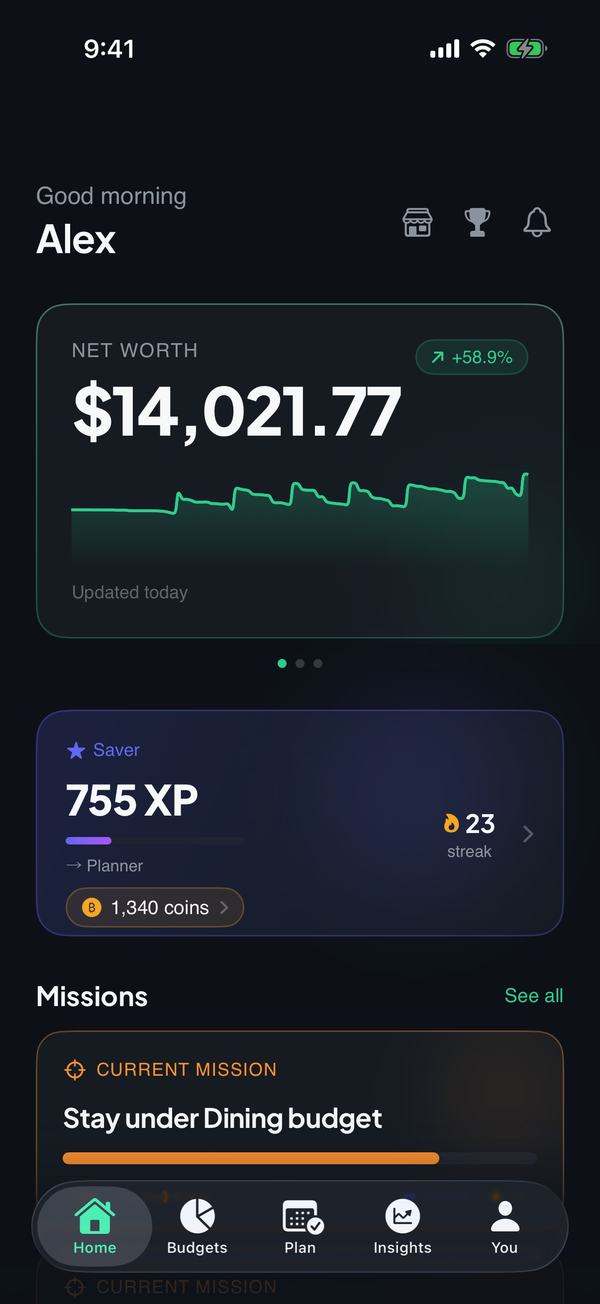
- Keep the streak going. Daily streaks, XP, coins and badges reward the small, regular check-in that makes a budget stick.
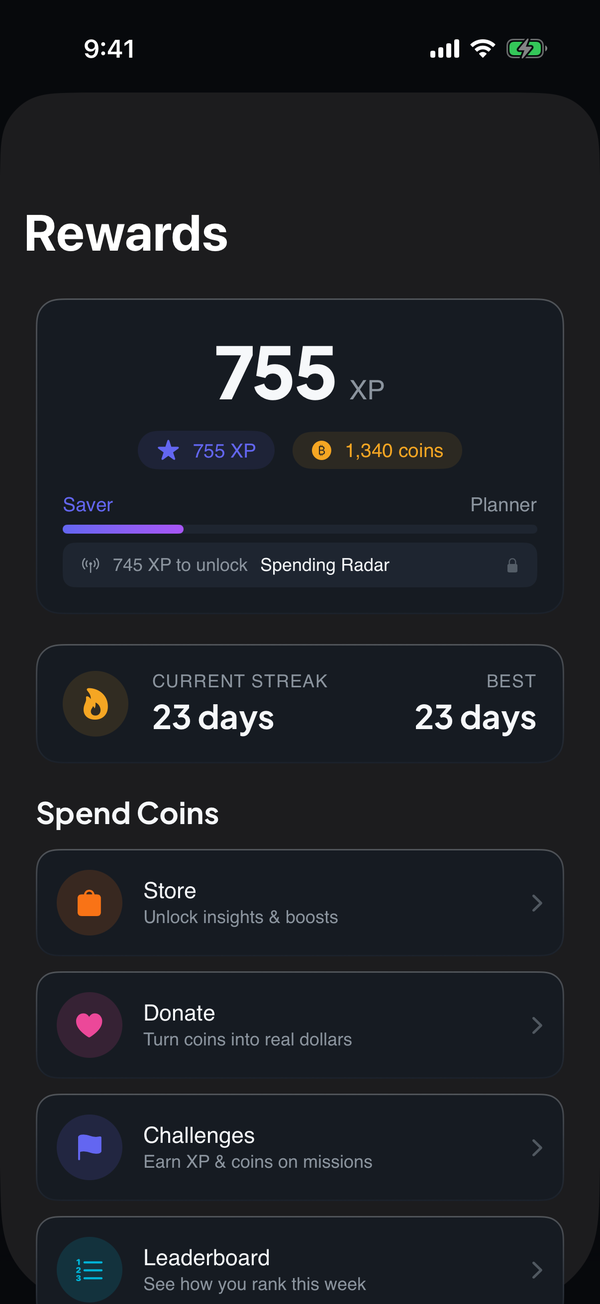
- Compare progress with friends, not balances. Private leaderboards with friends show who is keeping up with their habits, never how much anyone has.

See what Money Tree does or download it on the App Store. New users get a 7-day trial of every feature.
Frequently asked questions
Why can't I stick to a budget? Most budgets fail because they are too strict, too complicated or give no quick feedback. A simpler plan with room for small treats, checked in a few minutes a day, is easier to keep than a perfect one.
How long does it take to build a budgeting habit? There's no fixed number. Many people find the first few weeks the hardest, and that a short daily check makes the habit stick sooner than a long weekly review.
What should I do if I overspend in a category? Treat it as information, not failure. Note where it happened, adjust next month's limit if it was unrealistic, and carry on. One bad week doesn't cancel a budget.
Money Tree is a personal finance tool, not financial advice. This article is general information and doesn't take your circumstances into account.