 Money Tree
By Money Tree team,
What is a financial health score?
Short answer: a financial health score is one number that sums up how your money is doing right now, for you and not for a lender. It usually looks at three things: whether you spend less than you earn, whether you have a cushion for surprises, and whether your bills are paid on time.
You know roughly how fit you are. You feel it on the stairs. Money is harder to feel. The balance goes up and down, the bills come and go, and "am I doing okay?" never gets a clear answer.
A financial health score gives that answer in one number.
What goes into it
Different apps work it out differently, but most look at a few plain things:
1. Do you spend less than you earn?
This is the big one. If more goes out than comes in, nothing else can hold up for long. If a little stays behind each month, everything else gets easier.
2. Do you have a cushion?
A cushion is money set aside for the surprise: the car, the dentist, the week off work. Even a small one changes how a bad month feels.
3. Are your bills paid on time?
Late bills cost fees, and they're a sign the month got away from you. A score that tracks this nudges you to look before the due date.
4. Is your net worth going the right way?
Net worth is what you own minus what you owe. It doesn't have to be big. It has to be heading up over months, not down.
What a score is good for
A score is a dashboard light. It won't tell you what to do, but it tells you when to look. If it drops, something changed: a bill grew, income dipped, the cushion got used. That's your cue to open the app and find out which.
It's also a fairer measure than your balance. A balance looks great the day after payday and terrible the day before. A score looks at the shape of the whole month.
What it isn't
- It isn't a credit score. Lenders don't see it, and it doesn't affect whether you can borrow.
- It isn't a judgement. A low score isn't a bad person. It's a month that needs a look.
- It isn't a plan. The score tells you where you are. The budget, the goal and the reminders are what move it.
Where it goes wrong
- Chasing the number. The score moves because the habits moved. Fix the habit and the number follows.
- Checking it once. One reading means nothing. The trend over weeks is the useful part.
- Comparing with someone else. Your score is built from your bills and your income. It isn't a league table.
How to do it in Money Tree
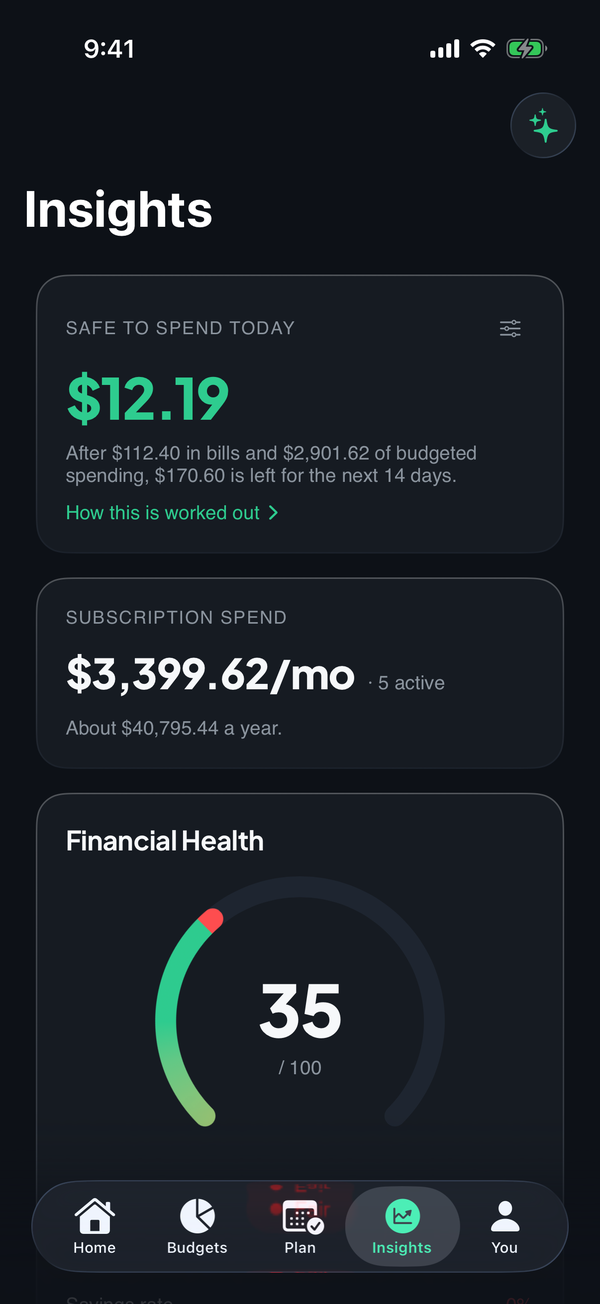
- See the score on the Insights screen. Money Tree shows your income, your cash on hand and a financial health score there, under what's safe to spend.
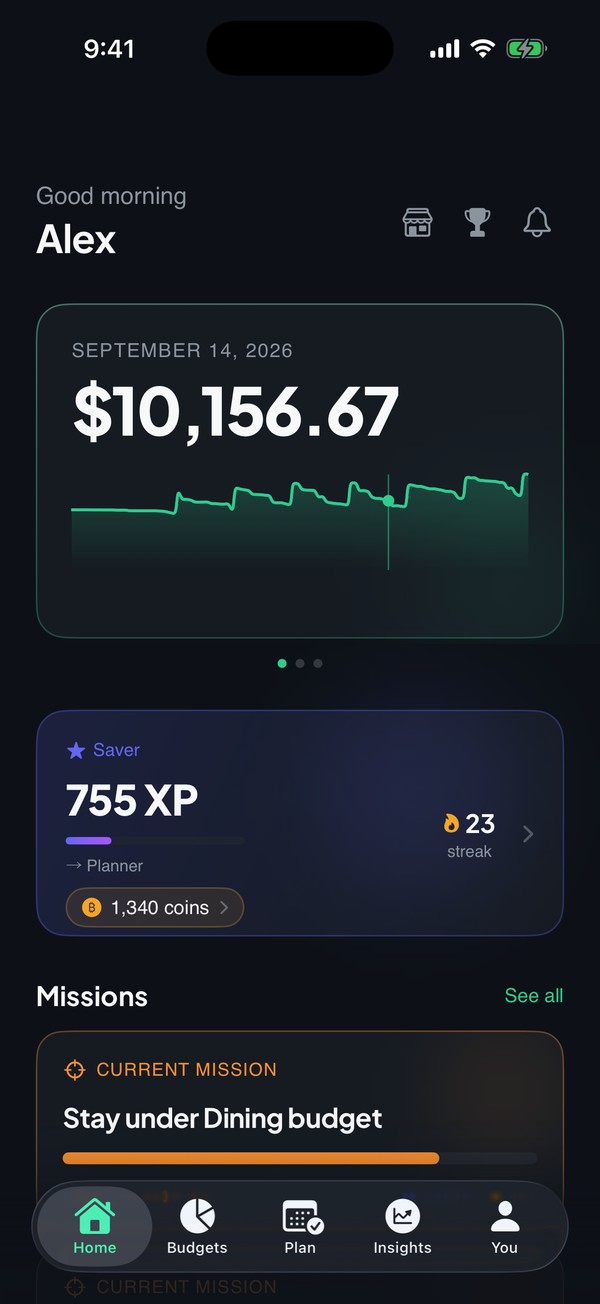
- Watch net worth over time. Net worth across your connected accounts keeps its history, so you can see the direction, not just today.
- Keep bills on time. Recurring payments are detected, with a reminder before each one is due.
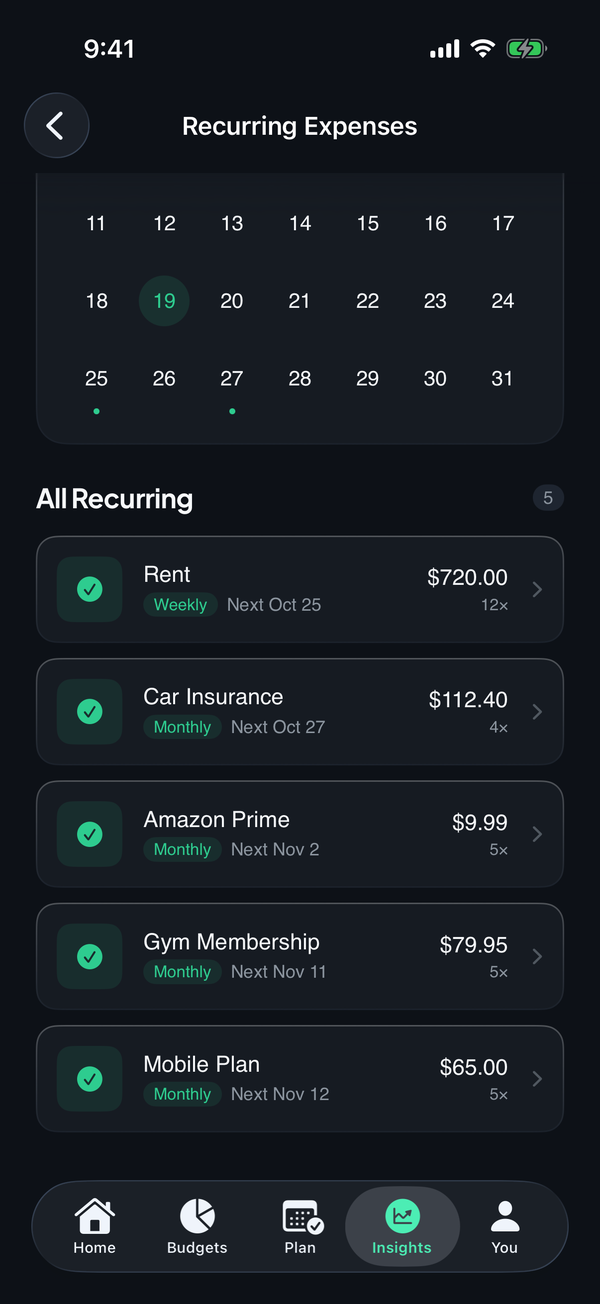
- Spend less than you earn, one day at a time. Safe to Spend shows what's left for today after bills, budgets and a buffer.
See what Money Tree does or download it on the App Store. New users get a 7-day trial of every feature.
Frequently asked questions
What is a financial health score? One number that sums up how your money is doing right now. It usually looks at whether you spend less than you earn, whether you have a cushion for surprises, and whether your bills are paid on time.
Is a financial health score the same as a credit score? No. A credit score is about how you've handled borrowing, and banks use it when you ask to borrow. A financial health score is about your everyday money, for you. Nobody else sees it.
How do I improve my financial health score? Work on the thing that's pulling it down: spend a little less than you earn, build a small cushion, and keep bills paid before they're due. It moves as your habits move.
Money Tree is a personal finance tool, not financial advice. This article is general information and doesn't take your circumstances into account.