 Money Tree
By Money Tree team,
The no-spend week: seven days that can keep about $300
Short answer: for seven days you buy nothing but the basics: no coffee out, no bought lunches, no deliveries, no small online orders. If your extras usually come to about $43 a day, a week without them keeps about $300. Move that money to a goal the day the week ends.
It's Sunday night and you're looking at the week's spending. A coffee here. A lunch there. A delivery on Wednesday because you were tired. None of it felt like much. Together it was more than you thought.
A no-spend week is a reset. Seven days, a few clear rules, and a number at the end that may surprise you.
The sum
| Amount | |
|---|---|
| Coffee out, two a day | $10 |
| Bought lunch | $15 |
| Food delivery, averaged over the week | $12 |
| Small buys and treats | $6 |
| Extras in a normal day | $43 |
| Seven days of that | $301 |
| What a no-spend week keeps | about $300 |
Your day won't look exactly like this one. The point is that the extras add up to real money, and a week without them shows you how much.
The rules that make it stick
1. Decide what's "basic" before you start
Rent, bills, fuel to get to work and the groceries you'd buy anyway are basics. Everything else is an extra. Write the list down on day one so there's no arguing with yourself on day four.
2. Eat what's already in the house
Most kitchens hold a week of odd meals: the rice, the tins, the thing at the back of the freezer. A no-spend week is when they finally get eaten.
3. Delete the apps for seven days
The delivery app. The shopping app. If it's not on your phone, the 9 pm order doesn't happen. You can put them back on day eight.
4. Plan the hard moments
Thursday afternoon is when the coffee run happens. Friday night is when the takeaway happens. Know when your weak spots are and have something ready: a coffee from home, a meal already cooked.
5. Tell one person
A friend or partner doing it with you makes a difference. You don't need to compare money, just whether you both made it through the day.
Where it goes wrong
- Being too strict. If you count fuel and groceries, you'll quit by Tuesday. Keep the rules to the extras.
- Stocking up the day before. A big shop on Sunday isn't saving. It's moving the spending.
- Not moving the money. If the $300 stays in your everyday account, it gets spent the next week. Move it the day the week ends.
- Treating it as a punishment. It's one week. It's meant to show you something, not to make you miserable.
How to do it in Money Tree
- Pick a daily mission. The home screen shows today's mission, so there's a small thing to tick off each day of the week.
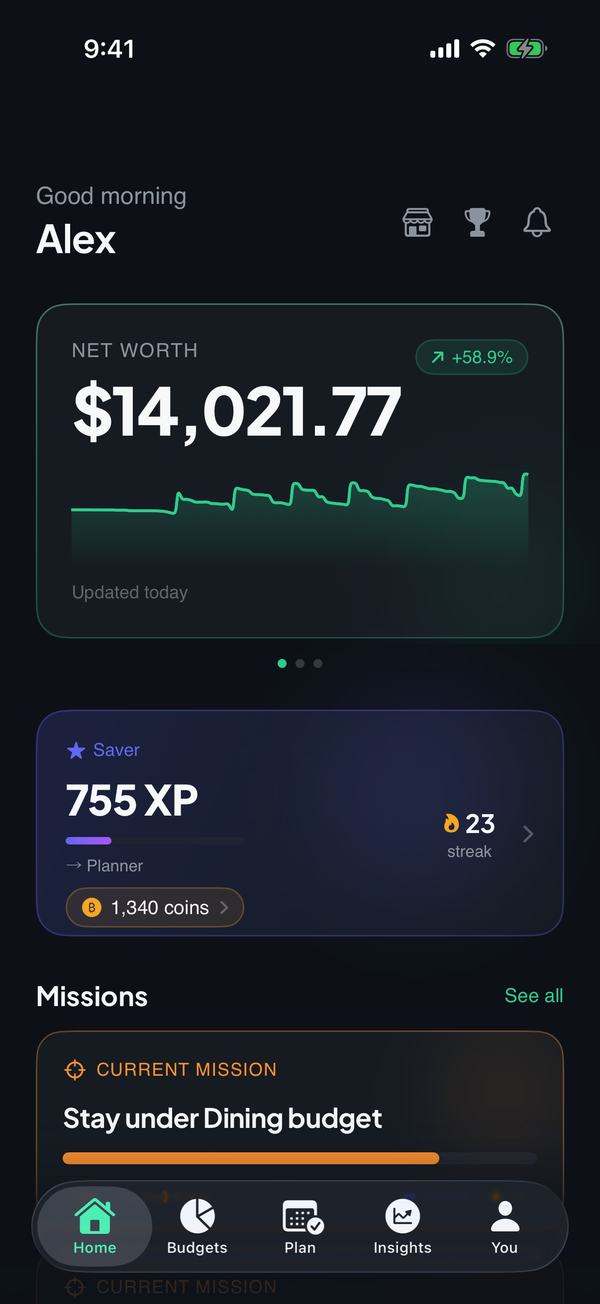
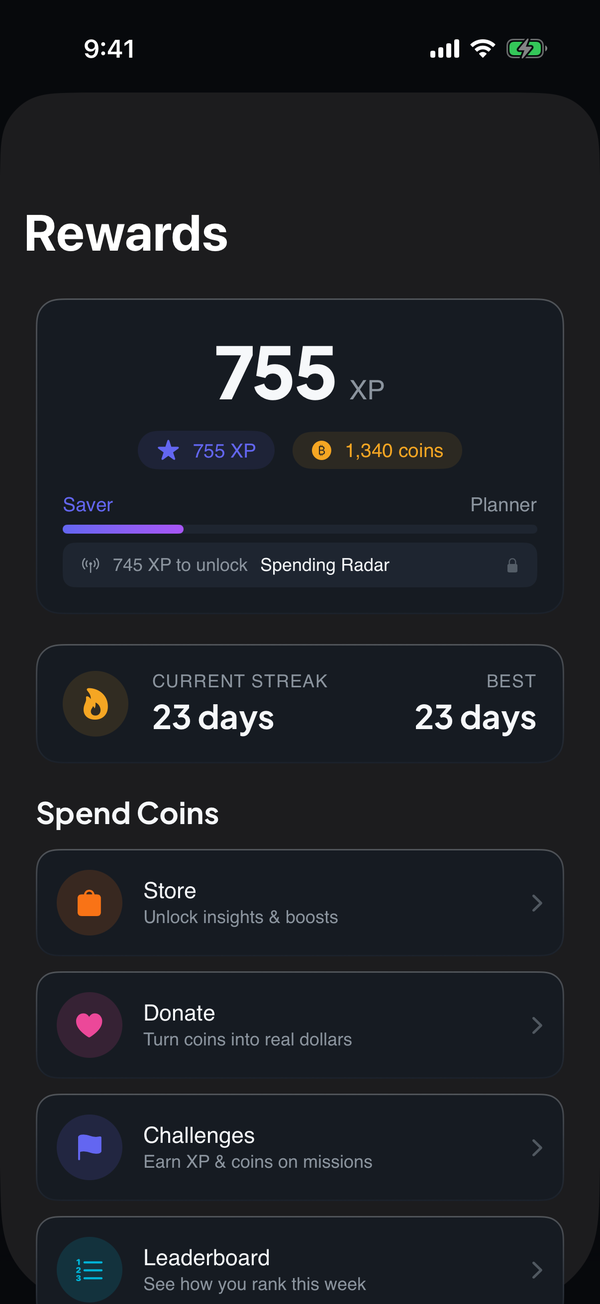
- Keep the streak going. Daily streaks and badges reward showing up, which is most of what a no-spend week is.
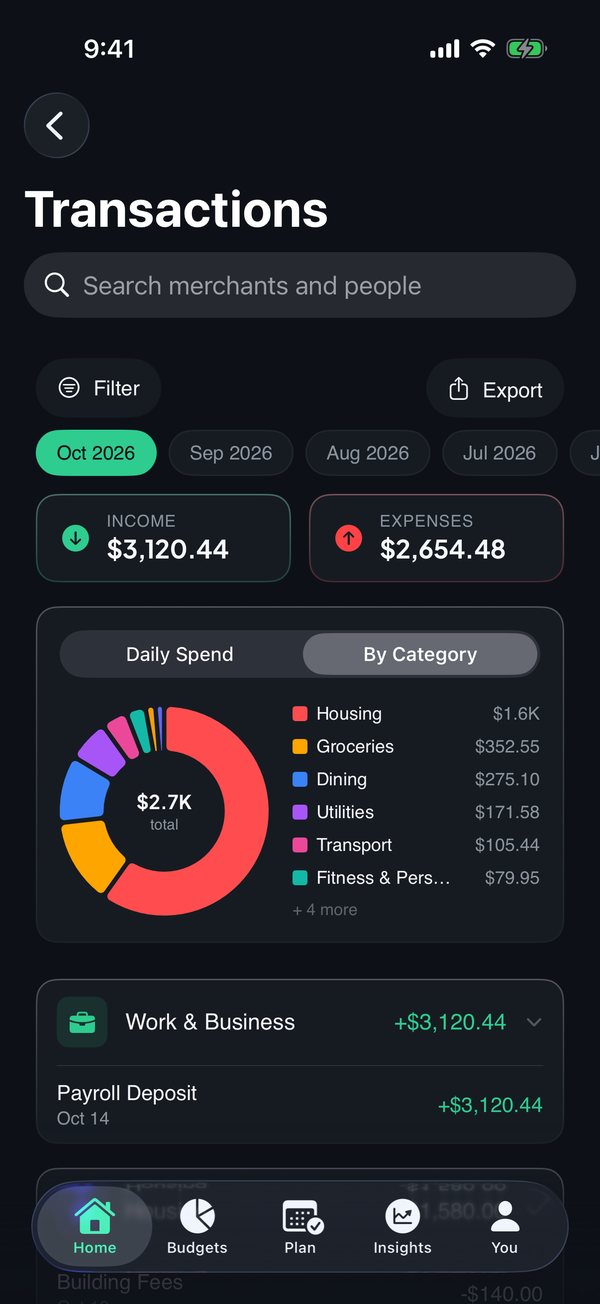
- Watch the categories. Transactions sort themselves, so by Friday you can see the dining and shopping lines sitting still.
See what Money Tree does or download it on the App Store. New users get a 7-day trial of every feature.
Frequently asked questions
What counts as spending in a no-spend week? The extras: coffee out, bought lunches, food delivery, small online orders and treats. Rent, bills, fuel to get to work and basic groceries are not part of the challenge.
How much can a no-spend week save? It depends on what you normally spend on extras. Someone who spends about $43 a day on them keeps about $300 in a week. Your number comes from your own last few weeks.
What do I do with the money I didn't spend? Move it somewhere with a name on it the day the week ends, before it blends back into your account. A goal you can see is easier to keep.
Money Tree is a personal finance tool, not financial advice. This article is general information and doesn't take your circumstances into account. The amounts above are examples, not results.