 Money Tree
By Money Tree team,
Sinking funds: how to plan for irregular expenses
Short answer: a sinking fund is money you set aside in small, regular amounts for a cost you know is coming, such as an annual bill, a gift or a repair. Divide the cost by the number of pay periods before it's due and move that amount aside each time.
Most "surprise" bills aren't surprises. They're irregular, and the budget just didn't know they were coming.
What belongs in a sinking fund?
Costs that are predictable but not monthly:
- Annual insurance or a yearly renewal
- Gifts and celebrations
- Car service and registration
- A holiday
- Medical and dental costs
- Back-to-school or new-year costs
How to work out the amount
- List the cost and the date.
- Count the pay periods until then.
- Divide the cost by that number.
A worked example
| Cost | Amount | Months away | Set aside a month |
|---|---|---|---|
| Annual insurance | $600 | 12 | $50 |
| Gifts | $300 | 10 | $30 |
| Car service | $400 | 8 | $50 |
| Holiday | $1,200 | 6 | $200 |
| Total | $330 |
Seeing the monthly total at once helps you decide which costs to plan for first.
Keep it separate
Many people give each sinking fund its own goal or pot, so money for one cost doesn't quietly pay for another.
Common mistakes
- Mixing it with the emergency fund. Expected and unexpected costs need separate homes.
- Forgetting a cost. Review the list once a year.
- Setting an amount you can't afford. Start smaller and add later.
- Dipping in for something else. If you do, top it back up.
How to do it in Money Tree
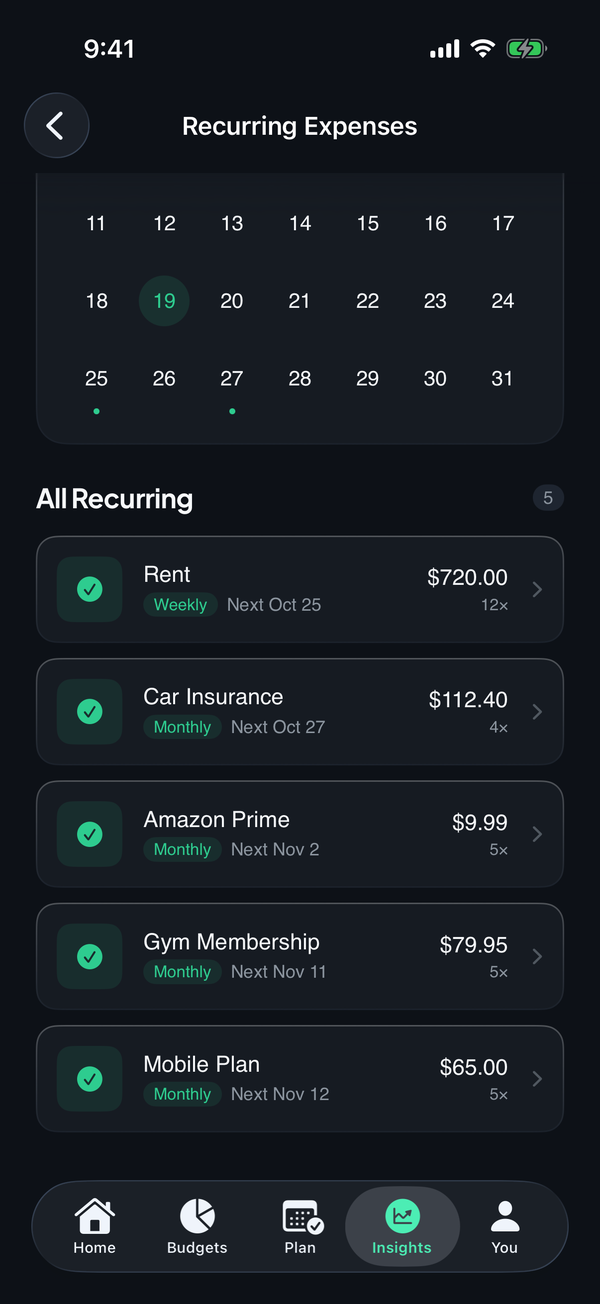
- Find the costs that repeat. Recurring payments detects your subscriptions and bills, with a reminder before each is due, so you can see which annual costs are coming.
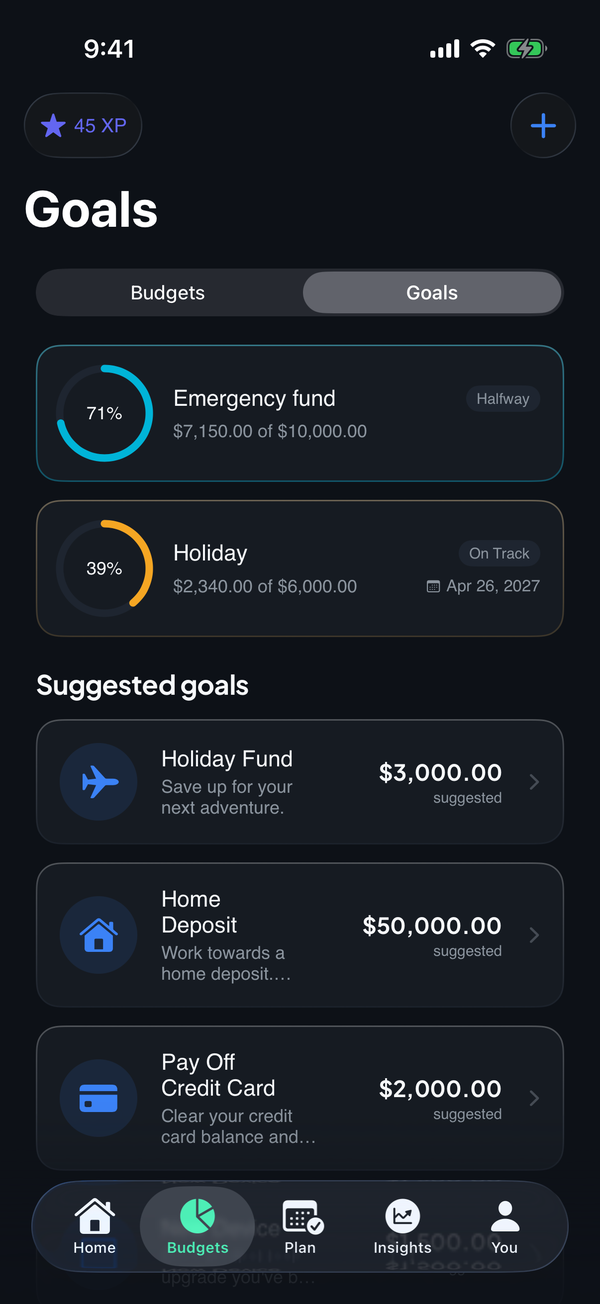
- Make each a savings goal. Savings goals show your progress, so a $600 insurance bill gets its own goal.
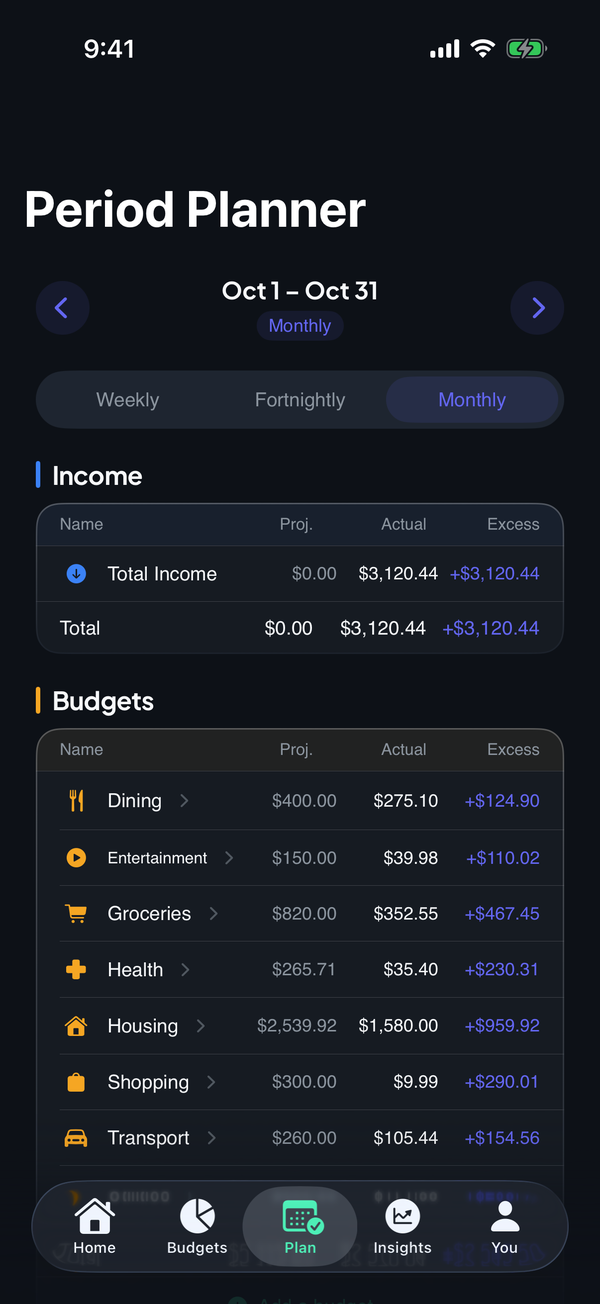
- Fit it into your pay period. The pay-period planner sets your income against budgets and upcoming bills.
Money Tree connects read-only, so it can't move money: the transfer happens in your banking app.
See what Money Tree does or download it on the App Store. New users get a 7-day trial of every feature.
Frequently asked questions
What is a sinking fund? A sinking fund is money you set aside in small regular amounts for a cost you know is coming, such as an annual bill, a gift or a repair, so it doesn't land all at once.
What's the difference between a sinking fund and an emergency fund? A sinking fund is for expected costs with a rough date. An emergency fund is for unexpected ones. Keeping them separate stops planned costs from draining your safety net.
How much should I put into a sinking fund? Divide the cost by the number of pay periods before it's due. For a $600 bill in 12 months, that's about $50 a month.
Money Tree is a personal finance tool, not financial advice. This article is general information and doesn't take your circumstances into account.