 Money Tree
By Money Tree team,
How to stop overspending on weekends
Short answer: most weekend overspending comes from not having a number in mind. On Friday, work out what's safe to spend before your next pay, decide how much of that is for the weekend, and keep that number where you'll see it. Check it before you buy, not after.
Monday to Friday you're fine. Coffee from home, lunch at your desk, the same bus. Then Saturday arrives. Brunch with friends. "Just a look" at the shops. Drinks that turn into dinner. A delivery on Sunday because you're tired.
By Monday the week is over budget, and none of it felt like a decision.
Why weekends cost more
Three things change on a Saturday:
- You have time. Time to go out, time to browse, time to say yes.
- You're with people. Nobody suggests splitting a $9 coffee. Everybody suggests one more round.
- There's no routine. On a work day your spending has a shape. On a weekend every hour is a fresh choice.
None of that is a character flaw. It's just where the money leaks.
Five fixes
1. Set the number on Friday
Before the weekend starts, look at what's safe to spend between now and your next pay, after the bills and the groceries. Decide how much of that is for the weekend. $60. $120. Whatever fits. The number matters less than having one.
2. Put it where you'll see it
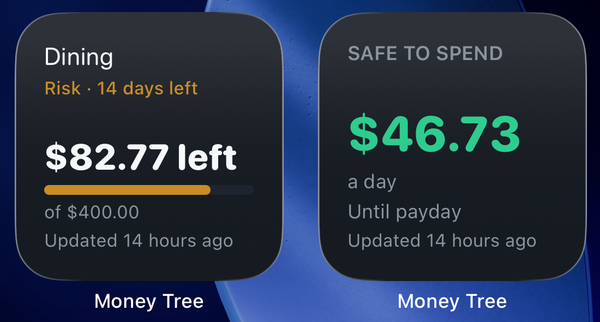
A number in your head is gone by Saturday lunchtime. A number on your phone's home screen is there every time you check the time.
3. Plan the one big thing
Most weekends have one event that costs the most: the dinner, the gig, the day out. Decide what it is and what it costs on Friday. Then the small stuff has to fit around it, not the other way round.
4. Make the cheap option the easy one
Have coffee in the house. Have a meal half-cooked. Charge the bike. When the cheap choice takes no effort, you'll take it more often.
5. Check before, not after
The habit that changes everything: look at the number before you tap the card. Not to say no. Just to know. Often that's enough to skip one or two things you didn't really want.
Where it goes wrong
- Setting the number too low. A $20 weekend will fail by Saturday noon. Start near what you really spend and trim from there.
- Counting it on Monday. By then it's a report, not a choice.
- Treating one bad weekend as the end. It's one weekend. Look at what tipped it and plan for that next week.
- Budgeting the week but not the weekend. The weekend is where the week's money goes. Give it its own line.
How to do it in Money Tree
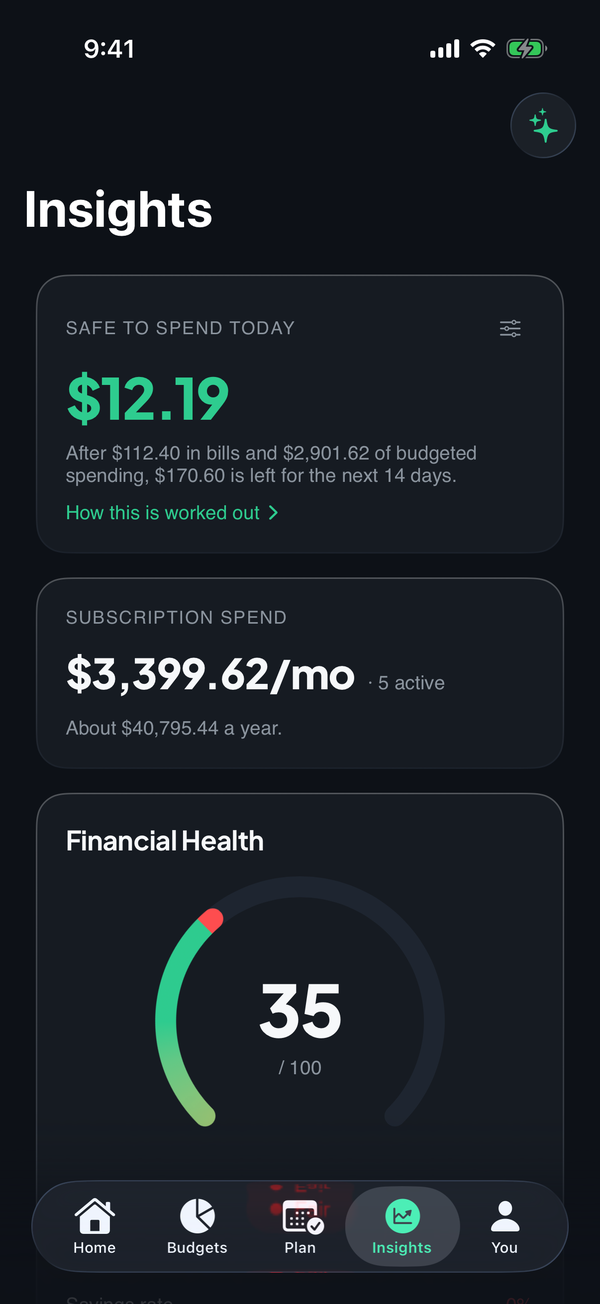
- Check what's safe to spend on Friday. Safe to Spend shows one number after upcoming bills, budgets and a buffer you choose (a little money you don't count). Tap it to see how it's worked out.
- Put the widget on your home screen. The Safe to Spend widget shows today's number without opening the app, next to the budget widget.
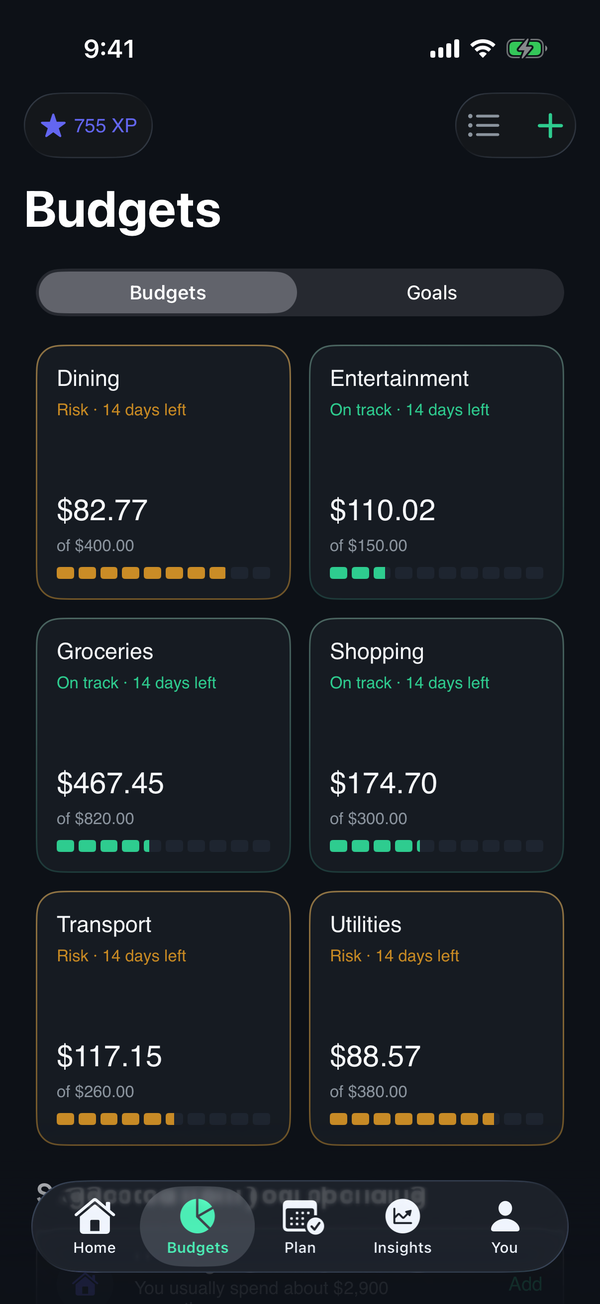
- Watch the dining and shopping budgets. Budgets by category show how much is left in each, with suggested limits from your recent spending.
See what Money Tree does or download it on the App Store. New users get a 7-day trial of every feature.
Frequently asked questions
Why do I overspend on weekends? Weekends have more spare time, more people around and fewer routines. Each small spend feels harmless, and nobody adds them up until Monday.
How do I set a weekend spending limit? On Friday, look at what's safe to spend between now and your next pay, after bills and the week's groceries. Decide how much of that is for the weekend, and check it before each buy.
What if I've already blown the weekend budget? Stop there, not the whole month. One expensive Saturday is a number, not a failure. Look at what tipped it over and plan for that next week.
Money Tree is a personal finance tool, not financial advice. This article is general information and doesn't take your circumstances into account.