 Money Tree
By Money Tree team,
How to save money with friends without sharing your balance
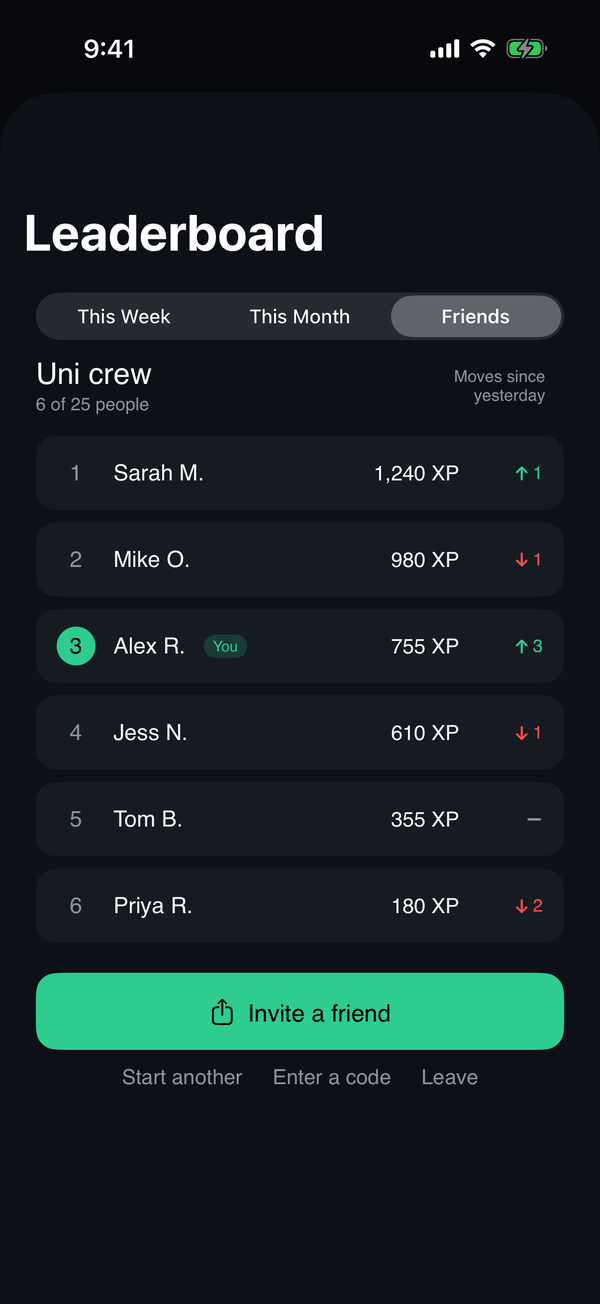
Short answer: saving sticks better when someone else is doing it too. The trick is to share the habit, not the numbers. Compare streaks, check-ins and goals reached, and keep every balance private. A private leaderboard does exactly that.
Your friend says she is saving for a trip. Your cousin is "doing a no-spend month." You nod and say, "I should do that too."
Then you don't, because it is just you, alone with a spreadsheet, and nobody will notice if you quit.
Now picture a small group chat where everyone is checking in on the same day. Skipping it feels different. That is the whole idea.
Why it works
Three things change when friends are in it with you:
- Someone notices. A streak that ends is visible. That is a gentle push to check in again.
- It feels like a game. Points and moves up the board are more fun than a column of numbers.
- You are not alone. Money can feel like a private worry. A shared habit takes some of the weight off.
None of this needs anyone to say what they earn or what they have.
What to share, and what to keep private
| Share | Keep private |
|---|---|
| Your check-in streak | Your balance |
| Points this week | Your income |
| A goal you reached | What you owe |
| A no-spend day | What things cost you |
If a friend wants to talk numbers, that is their choice. The leaderboard never asks.
Three ways to start
1. Pick one shared habit
Keep it small. "Look at our money for two minutes a day" is a good one. "Save $500 each by December" is too much to compare fairly, because every income is different.
2. Make a small group
Three to six people is enough. A big group goes quiet. A small one can cheer each other on.
3. Talk about the habit, not the money
"I kept my streak, did you?" is an easy message to send. It keeps the chat light and the numbers out of it.
Where it goes wrong
- Comparing balances. Everyone starts from a different place. Compare effort, not totals.
- Making it a contest to spend less. Someone will stretch too far. Keep it about showing up.
- A group that is too big. The chat dies in a week. Start small.
- Mixing up the two tools. A leaderboard compares progress, like streaks and points. A shared budget adds up the purchases each person links to it. Neither one shows anyone's balances, and neither moves money.
How to do it in Money Tree
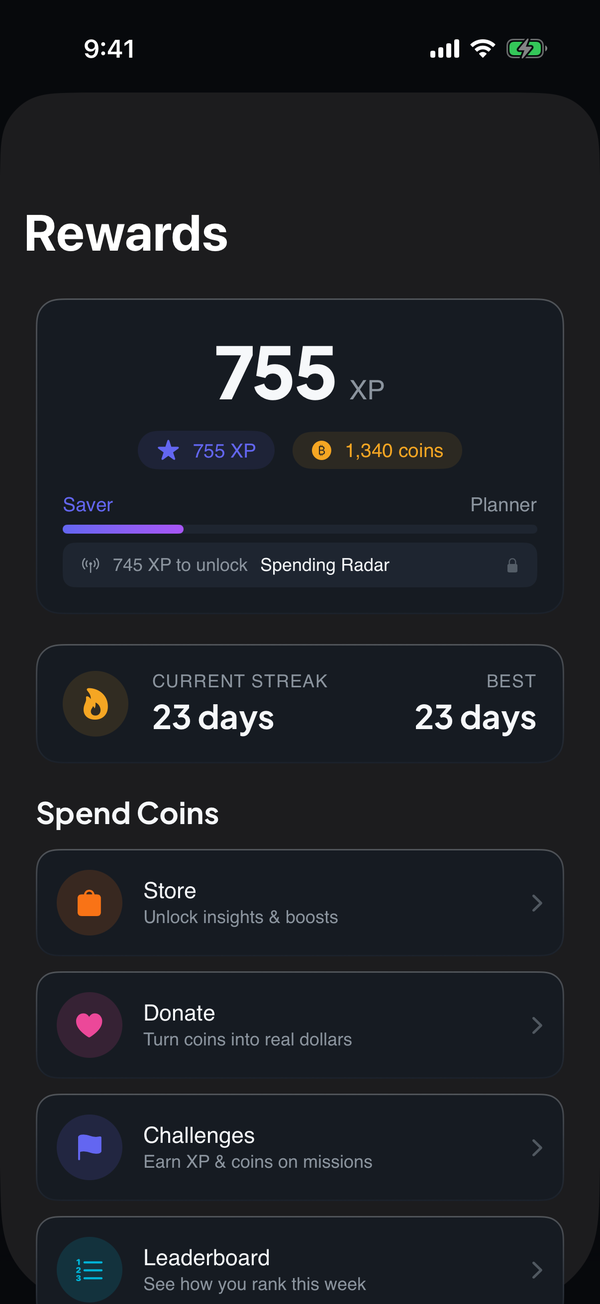
- Start a streak. A daily check-in builds a streak and earns points, so there is something to compare.
- Join a private leaderboard. Add friends and see who has the longest streak this week and who moved up since yesterday. Balances stay private.
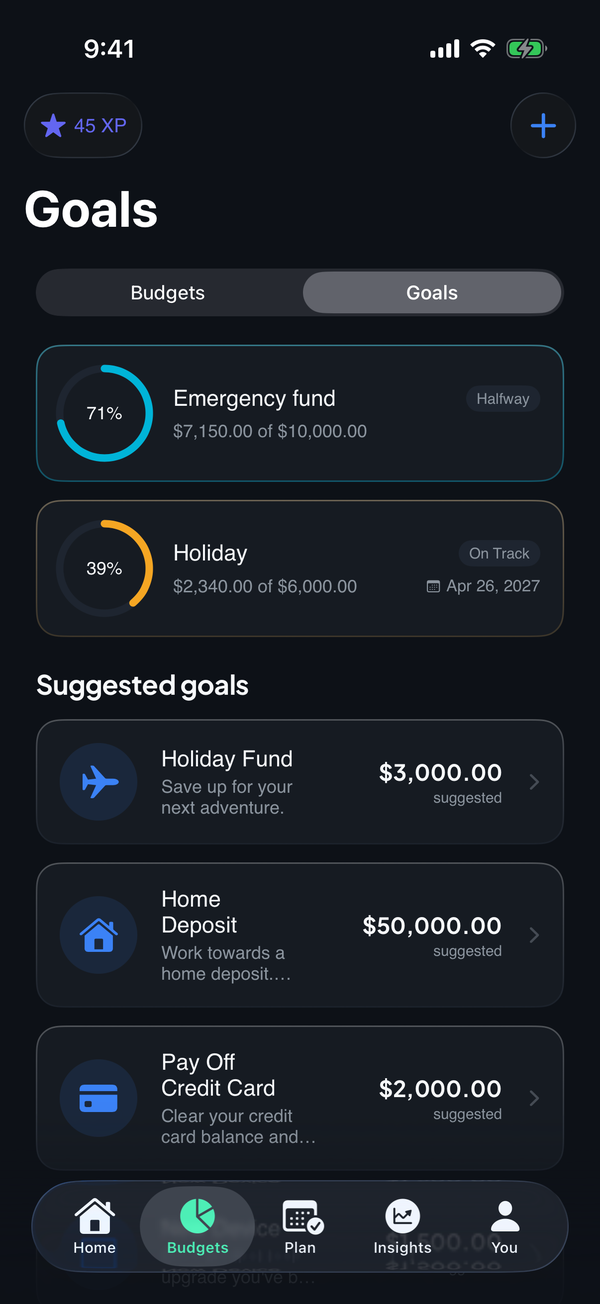
- Set your own goal. Your savings goal is yours, with its own progress ring.
See what Money Tree does or download it on the App Store. New users get a 7-day trial of every feature.
Frequently asked questions
Do my friends see how much money I have? No. Money Tree's private leaderboards compare progress, such as streaks and points. They never show balances.
Can friends share one budget in Money Tree? Yes. A shared budget lets you invite people, link your own purchases to it, and see the total and each person's share. It never moves money, and nobody's bank accounts or balances are shared.
How do I save money with friends without awkward money talk? Agree on a habit instead of a number, such as a weekly check-in or a no-spend day. Then compare how you are doing at the habit, not what is in the bank.
Money Tree is a personal finance tool, not financial advice. This article is general information and doesn't take your circumstances into account.