 Money Tree
By Money Tree team,
Does gamified budgeting work? Streaks, rewards and habits
Short answer: gamified budgeting adds game-style pieces to a budget: a daily streak, points for checking in, badges and small missions. It works for the part most budgets fail at, which is opening the thing every day. It won't rescue a budget that's too strict, and it goes wrong if the game rewards spending or compares balances.
You know the feeling from a language app. Day 14. Day 15. You open it at 11 pm because you don't want to lose the streak. Nobody made you. The little flame did.
Gamified budgeting borrows that. The question is whether a flame can do for your money what it does for your Spanish.
What "gamified" means here
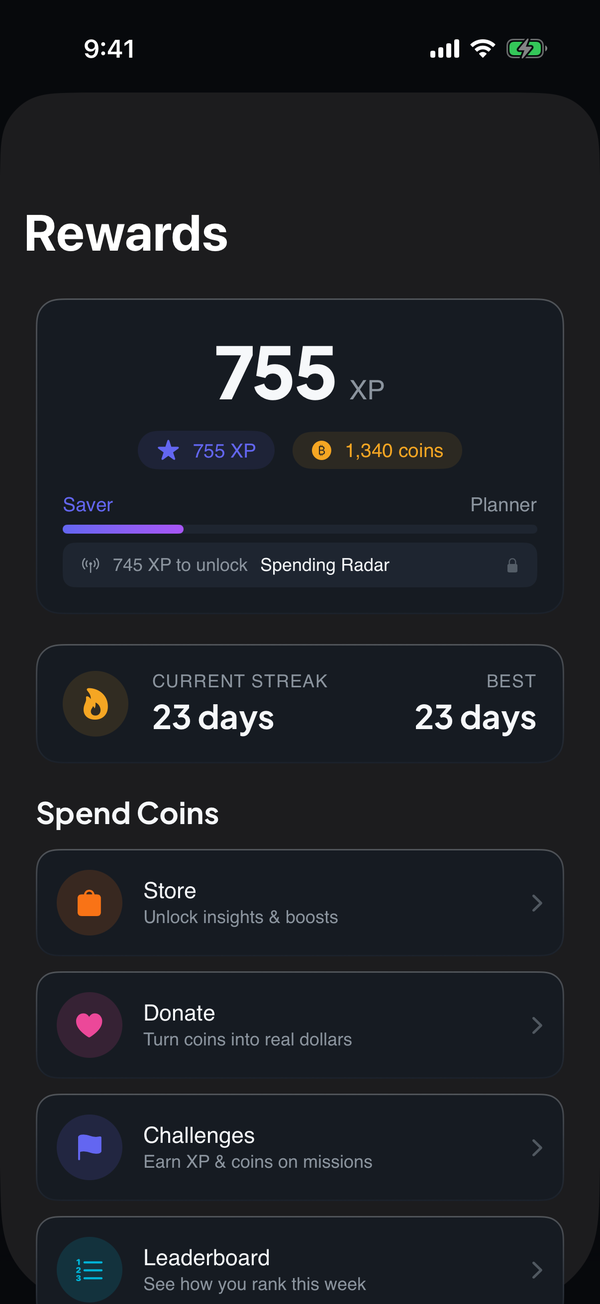
- A streak. Open the app and do one small thing each day. Miss a day, the count resets.
- Points. Sometimes called XP, or coins. You earn them for showing up and for small actions, like checking a budget or setting a reminder.
- Badges. A mark for a milestone: 7 days, 30 days, first goal reached.
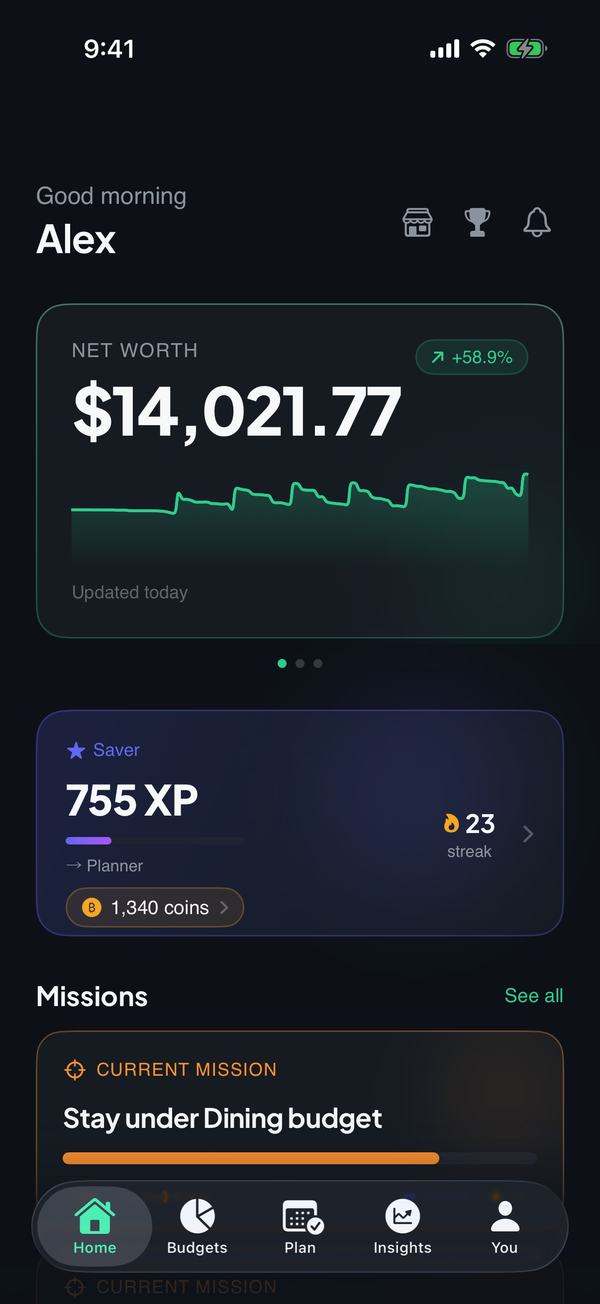
- Missions. A small task for today. "Look at your dining budget." "Check tomorrow's bill."
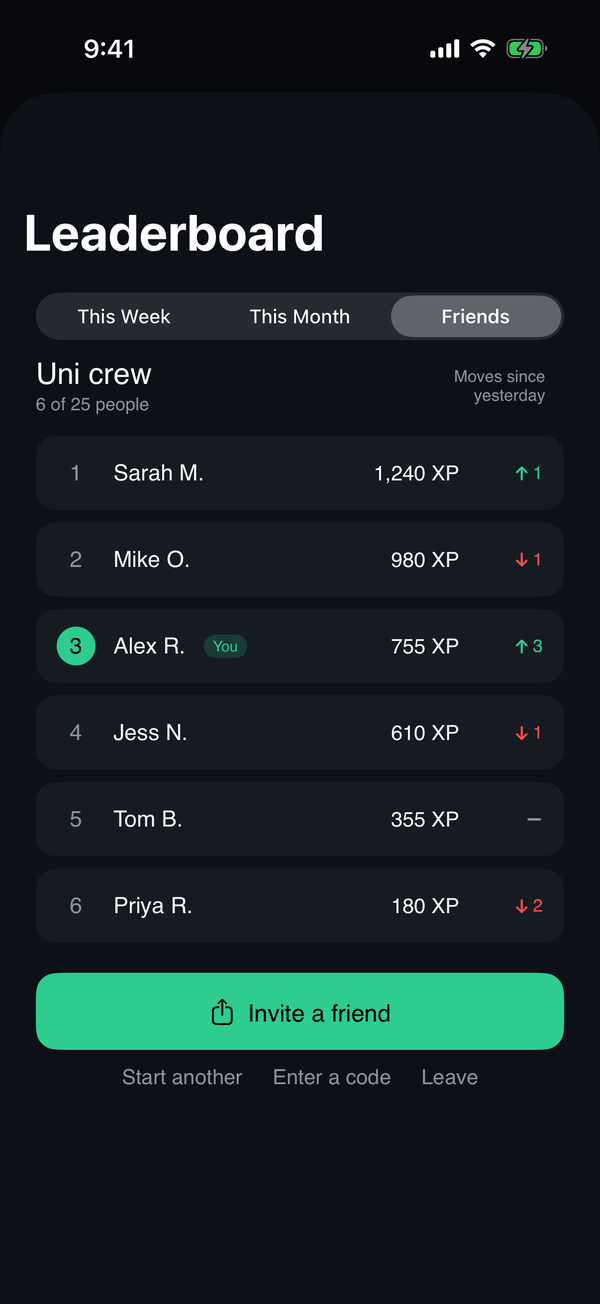
- Friends. A leaderboard of who's keeping up, for people who like a bit of company.
Why it helps
Most budgets don't fail because the sums are wrong. They fail in week three, when you stop looking. We wrote about why budgets fall apart, and "nobody looks" is most of it.
A streak changes the question. Instead of "should I check my budget?" it's "do I want to lose day 22?" For a lot of people that's an easier question, and the answer is a two-minute check they'd otherwise skip.
The points and badges do a second thing: they make the boring parts feel finished. Setting a bill reminder isn't fun. Getting a badge for it is a little bit fun.
Where it goes wrong
- Rewarding the wrong thing. If you get points for spending, the game is working against you. Points should come from looking, planning and saving, never from buying.
- Comparing money. A leaderboard of balances is a bad night for everyone. Compare streaks and progress, not amounts.
- Streak panic. If losing the streak feels like failure, the game has turned into a chore. A missed day should cost a number, not a mood.
- Game but no budget. Points on their own don't change anything. The streak has to lead to a budget, a bill list and a daily number underneath.
An imagined month
Made-up numbers to show the idea.
| Without the game | With the game | |
|---|---|---|
| Checked the budget this month | 4 times | 26 times |
| Noticed the bill before it was due | no | yes, day 9 |
| Dining budget by month end | over by $70 | over by $12 |
| Still budgeting in month three | no | yes |
The sums didn't change. The looking did.
How to tell if it's for you
Gamified budgeting suits people who:
- have started and dropped a budget before,
- respond to streaks in other apps,
- like a bit of company, or a bit of competition, as long as it's not about money.
It suits fewer people who already check their money daily out of habit. If you're one of those, the game is a nice extra, not the point.
How to do it in Money Tree
- Start the streak. Open the app each day and do today's mission. Daily streaks, XP, coins and badges build up as you go.
- Do the mission. The home screen shows one small task for today, so there's always a reason to look.
- Invite friends to a private leaderboard. Friends join by link or code and see progress, never balances or spending.
- Keep a real budget underneath. Budgets by category and Safe to Spend are what the streak is for.
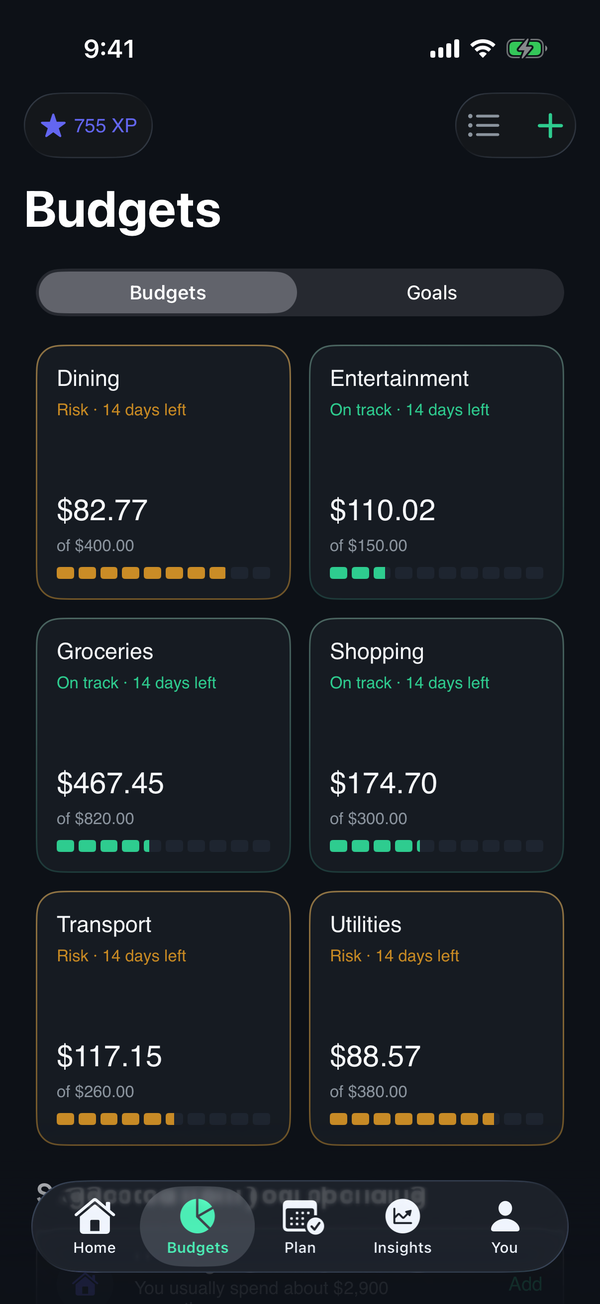
See what Money Tree does or download it on the App Store. New users get a 7-day trial of every feature.
Frequently asked questions
What is gamified budgeting? Budgeting with game-style pieces added: a daily streak, points for checking in, badges for milestones, and small missions. The aim is to make looking at your money a habit instead of a chore.
Does gamified budgeting actually work? It helps with the part most budgets fail at: showing up every day. It won't fix a budget that's too strict, but it makes the daily check far more likely to happen.
Is it safe to compare budgets with friends? It depends what's compared. Comparing streaks and points is fine. Comparing balances or spending is where it goes wrong. Pick an app that only shows progress, never money.
Money Tree is a personal finance tool, not financial advice. This article is general information and doesn't take your circumstances into account.