 Money Tree
By Money Tree team,
Budgeting for beginners: your first 30 days
Short answer: don't start with limits. Spend week one watching where the money goes, week two listing every bill, week three setting five or six broad limits and one daily number, and week four starting a small goal. By day 30 you have a budget built from your own life, not someone else's rules.
You've thought about it for months. Maybe you downloaded a spreadsheet once and gave up by the second tab. Maybe you set tight limits on a Sunday and broke them by Wednesday.
Here's a slower way in. Four weeks. One small thing each week.
Week 1: Just look
No limits. No rules. For seven days, your only job is to see where the money went.
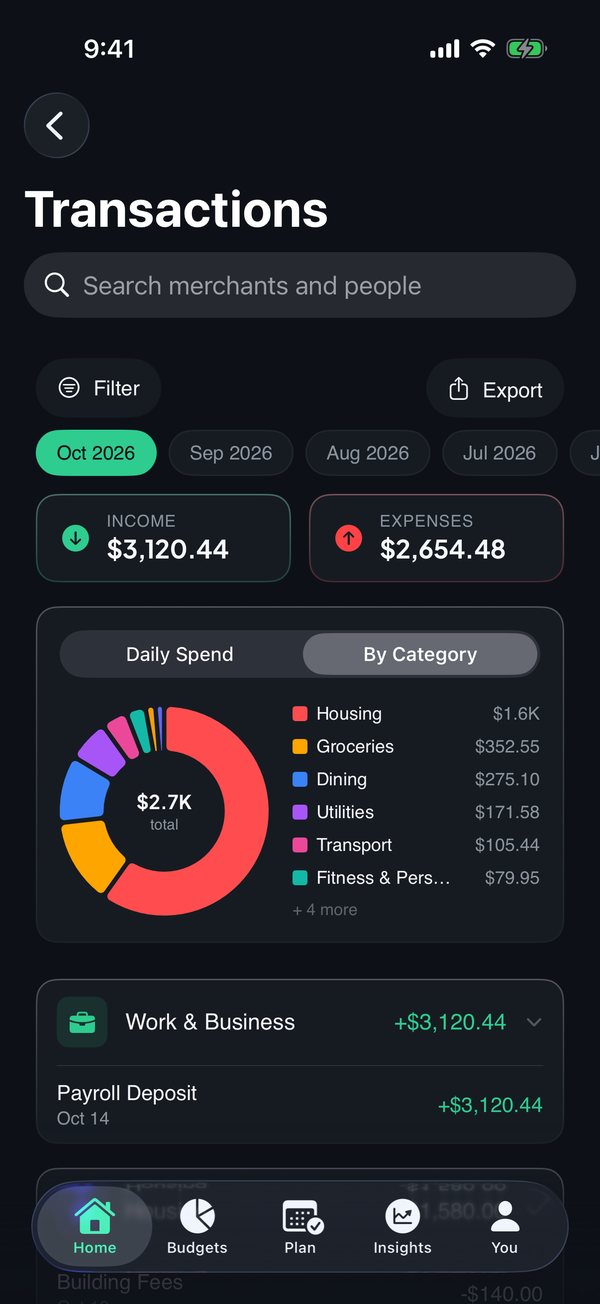
Open your bank app each evening and read the day's spending. Don't judge it. Just notice. The coffee. The parking. The order you forgot about. By Sunday you'll know things you didn't know on Monday.
If your spending sorts itself into groups like groceries, dining and shopping, this week takes two minutes a night.
Fix for week one: if you don't look, nothing else works. Set a phone alarm for the same time each evening.
Week 2: List the bills
Now the fixed stuff. Rent or mortgage. Power. Phone. Internet. Insurance. Subscriptions. Loan repayments. Write each one down with the amount and the day it's due.
Your last three months of statements will show the repeats. Look for anything that charges the same amount at the same time. That's how you find the subscriptions you forgot.
Add up the month's bills. That number is spoken for before you spend a cent on anything else.
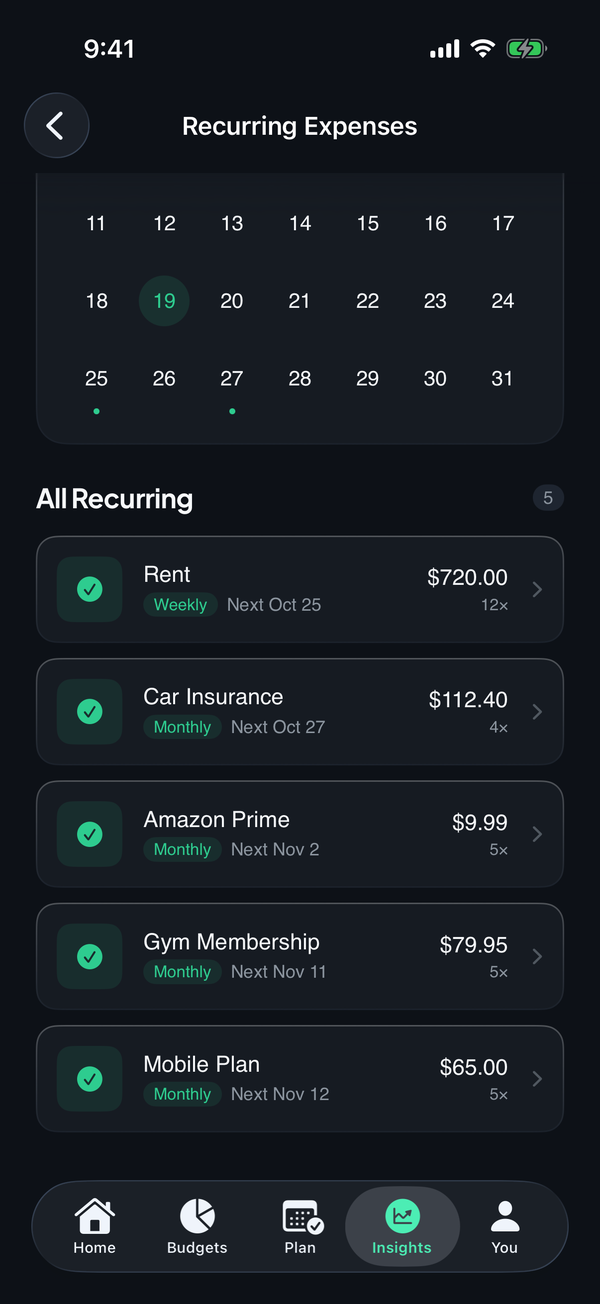
Fix for week two: put a reminder on each bill, two days before it's due. Late fees are the easiest money to stop losing.
Week 3: Set a few limits and one daily number
Two things this week.
A few broad limits
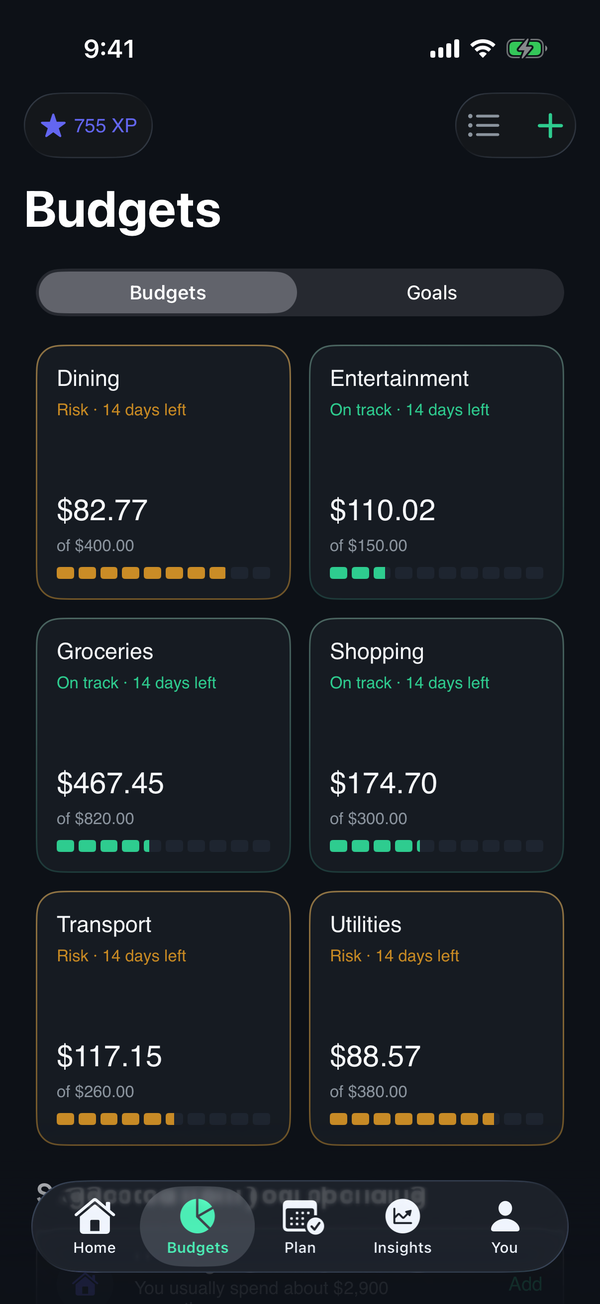
Look at week one's spending and give the biggest groups a limit. Five or six is enough: groceries, transport, dining, shopping, fun, savings. Set each limit close to what you actually spent. You'll trim later. A limit you can't keep is worse than no limit.
One daily number
This is the piece most beginners skip, and the one that makes a budget usable on a Thursday night. Take what's in your everyday account, take off the bills due before your next pay, take off what you've planned for groceries and savings, keep a small buffer (a little money you don't count), and divide what's left by the days until payday.
That's your safe-to-spend number for today. The full method is in how much can I spend today.
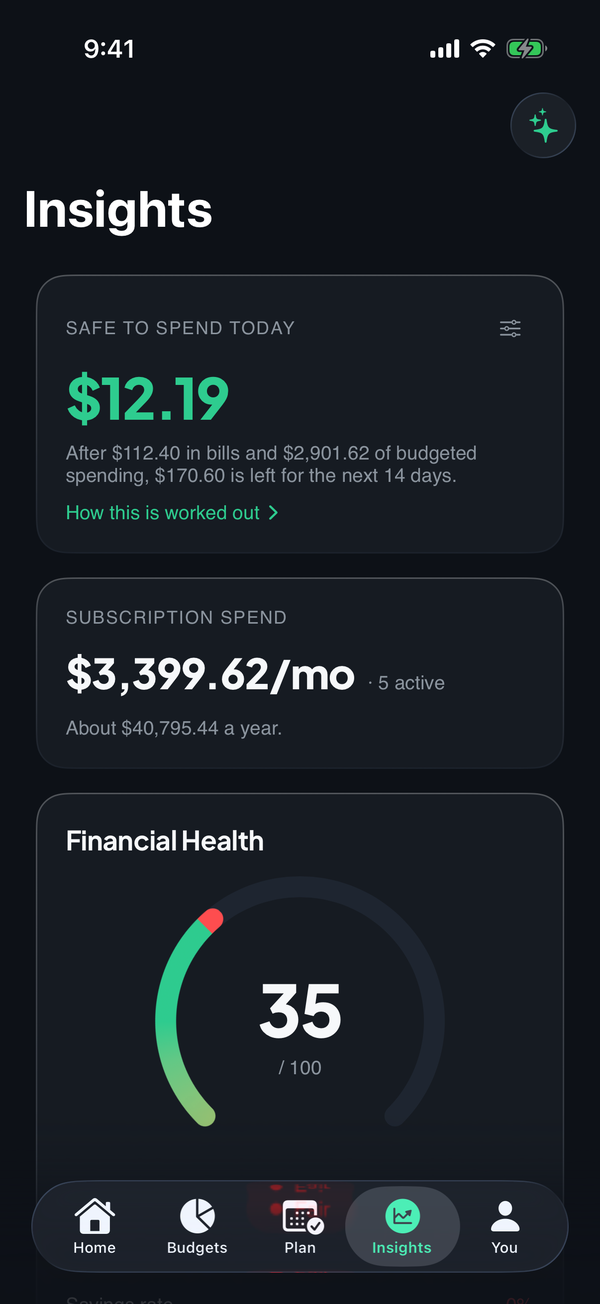
Fix for week three: check the daily number before you buy, not after. Not to say no. Just to know.
Week 4: Start a small goal
A budget with no reason behind it fades. A goal gives it one.
Keep it small. $500 for a trip. $300 for a cushion. The first emergency fund from zero. Give it a name and a target, and move something toward it the day you get paid, before the money can wander.
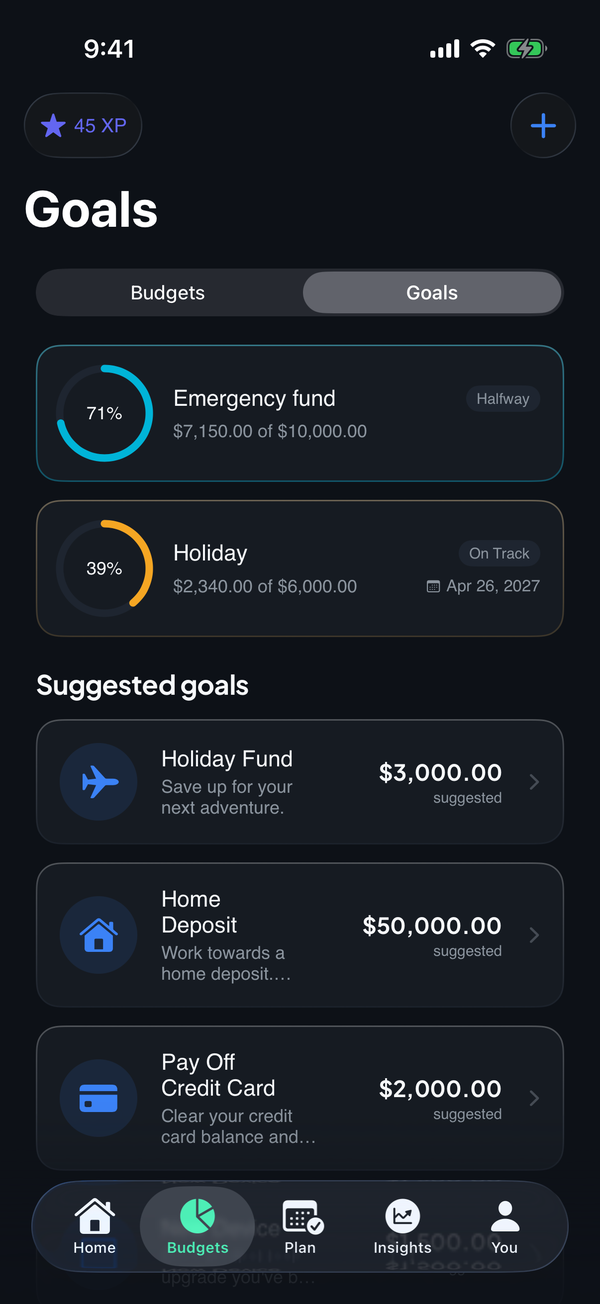
Fix for week four: move the money first, then spend. Saving what's left never works, because there's never anything left.
A worked example of the first month
| Week | What you did | What you found |
|---|---|---|
| 1 | Looked every evening | $140 on food delivery, more than expected |
| 2 | Listed 11 bills | $1,460 a month is spoken for |
| 3 | Set 6 limits and a daily number | About $38 a day is safe to spend |
| 4 | Started a $500 goal | $60 moved on payday |
Nothing here is strict. The person just knows more than they did on day one, and has a number to check at the till.
Where beginners go wrong
- Starting with limits. Limits set before you know your spending are guesses. Guesses fail.
- Too many categories. Twenty boxes means twenty decisions a day.
- Typing everything by hand. It works for a week. Let your bank do the typing.
- Quitting after one bad week. One overspend is information. Move the limit and keep going.
- No reason. A goal you care about keeps the budget alive past month one.
How to do it in Money Tree
- Connect your bank, read-only. Transactions come straight from your connected accounts, so week one is just reading, not typing. Money Tree can never move your money.
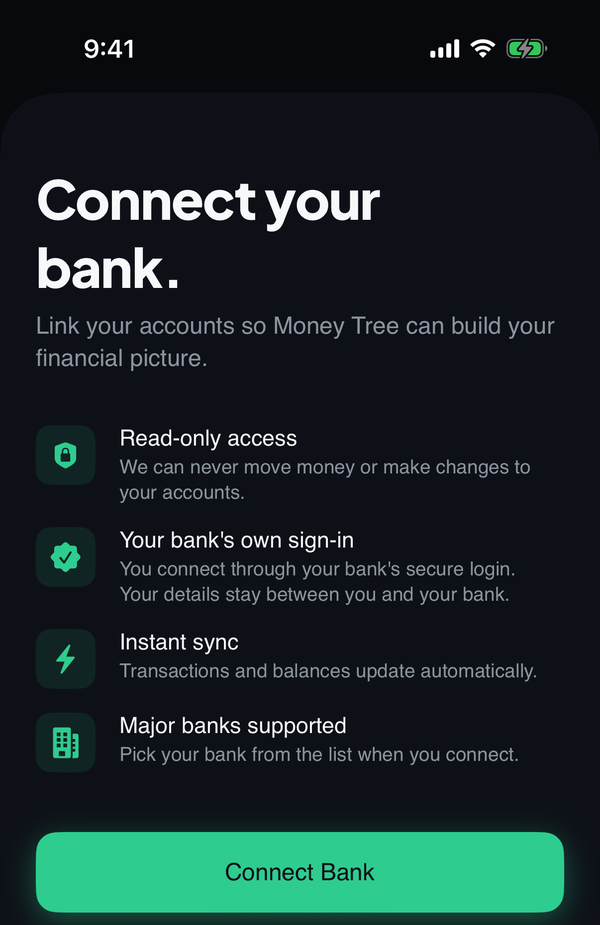
- Let the bills find themselves. Recurring payments are detected, with a reminder before each one is due.
- Set budgets with suggested limits. Budgets by category come with suggested limits based on your recent spending, so week three starts from your real numbers.
- Check Safe to Spend each day. One number after bills, budgets and a buffer you choose. Keep it on your home screen as a widget.
See what Money Tree does or download it on the App Store. New users get a 7-day trial of every feature.
Frequently asked questions
How do I start budgeting if I've never done it? Don't start with limits. Spend the first week just looking at where your money went. Then list your bills, set a few broad limits, and work out one daily number you can check before you buy.
How many budget categories should a beginner have? Five or six is plenty: housing, bills, groceries, transport, fun and savings. More than that means more decisions, and it gets hard to keep up.
What if I go over budget in the first month? Expect to. The first month is for finding out what you really spend. Move the limit to match, then trim it a little next month.
Money Tree is a personal finance tool, not financial advice. This article is general information and doesn't take your circumstances into account.